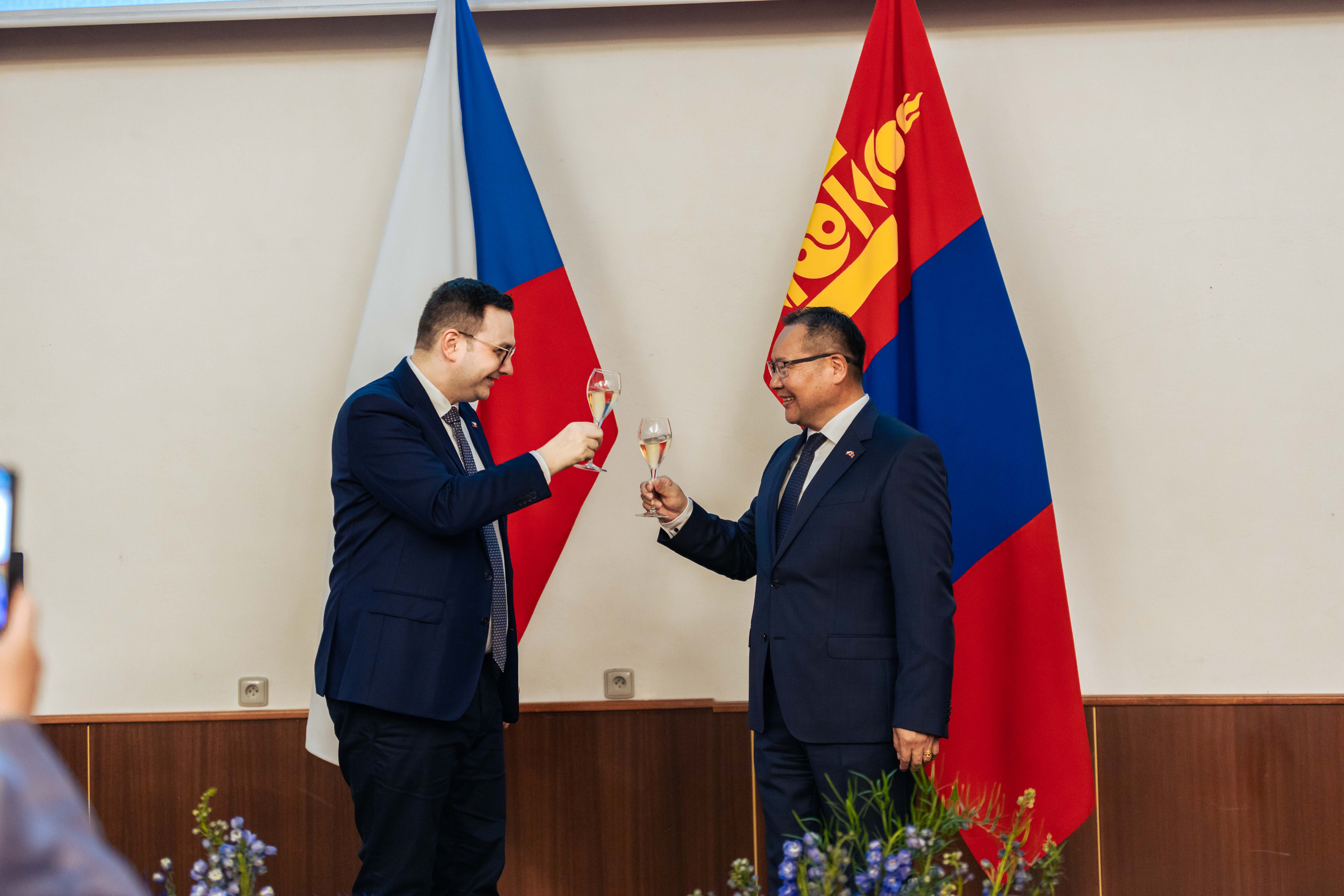
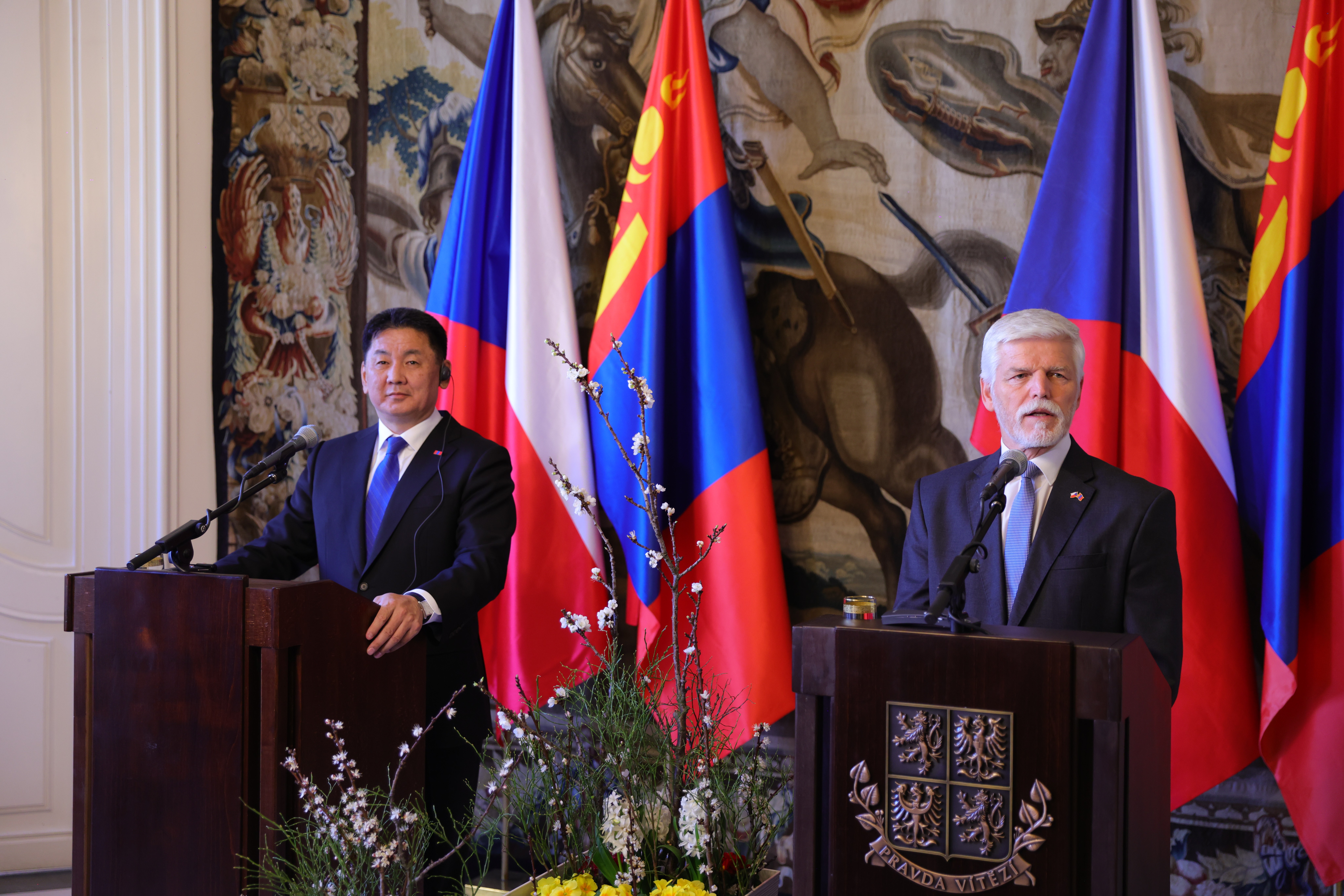
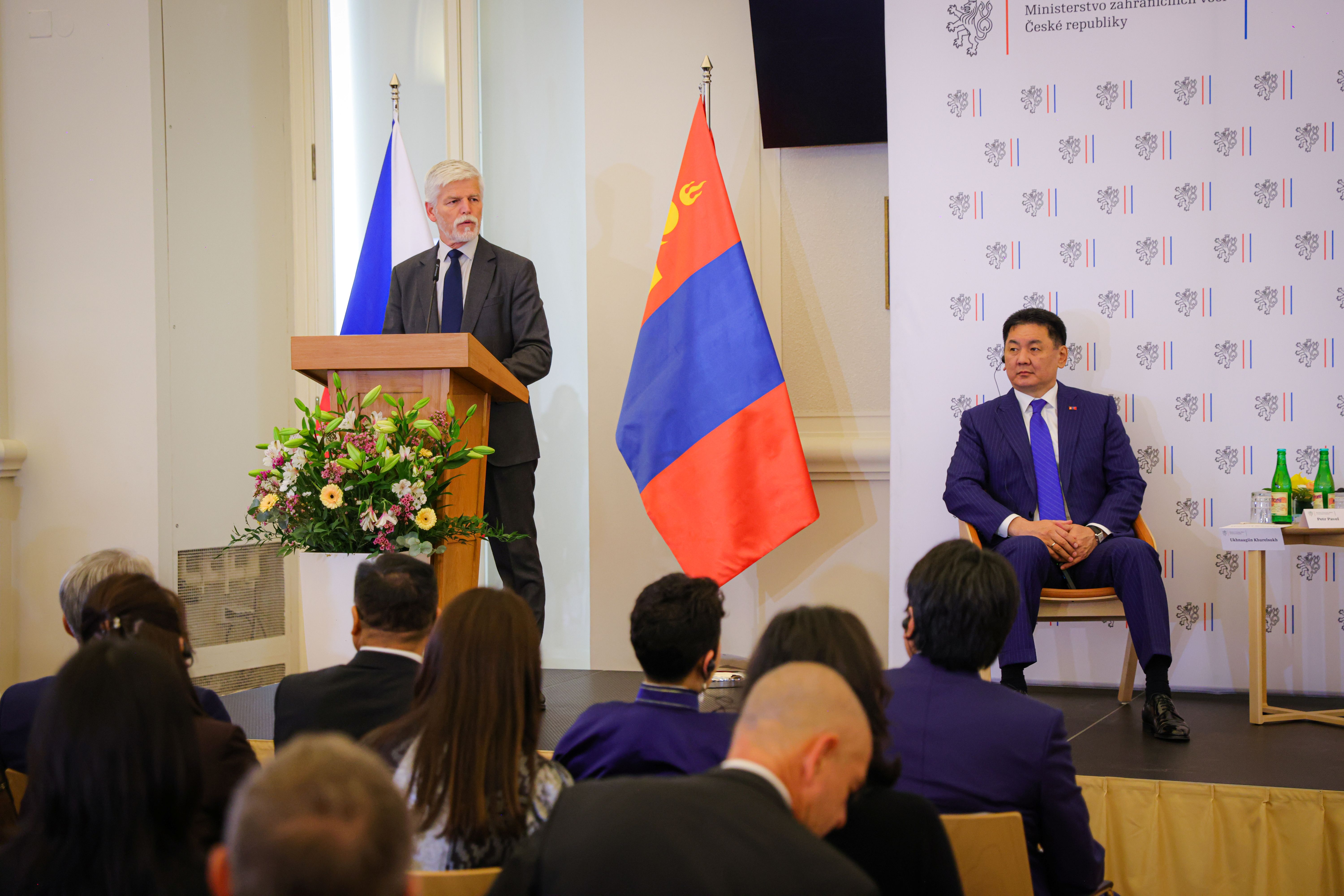
The Business Forum held in Prague during the state visit of the President of Mongolia
The forum held in Prague this March was the largest ever between our two countries, with over 100 Mongolian and 70 Czech entrepreneurs participating. Furthermore, over the last two years, Czech business representatives have visited provinces such as Arkhangai and Dornogobi to seek cooperation with local small and medium-sized enterprises (SMEs). This provides local Mongolian entrepreneurs with the opportunity to connect directly with Czech businesses. Currently, more than 400 Mongolian citizens and entities conduct business in the Czech Republic.
For our entrepreneurs, meeting the legal requirements and standards of the European Union remains a challenge for entering the market. However, these difficulties can be overcome through consistent private-sector cooperation. In this regard, our businesses should study and fully utilize the favorable conditions of the EU's GSP+ program, which allows 7,200 types of goods to be exported to the EU market duty-free.
On the other hand, which sectors are Czech investments and interests most concentrated in within Mongolia?
Traditionally, our two countries have maintained broad cooperation in such sectors as mining and minerals, infrastructure, industry, healthcare, agriculture, and construction.
During the state visit of the President of Mongolia to the Czech Republic, a Mongolia–Czech Business Forum was held, at which the Head of State of Mongolia expressed strong interest in cooperating with the highly industrialized Czech side in implementing 14 mega projects aimed at expanding the national economy, including increasing domestic energy production, advancing industrialization, promoting regional development, and constructing new cities. He emphasized Mongolia’s intention to attract Czech investors’ expertise, experience, advanced technology, innovation, and capital.
The Czech side, in turn, reaffirmed its commitment to localizing its advanced technology, know-how, and innovations in the above-mentioned sectors, and to supporting business cooperation between the two countries.
What do you consider the most promising sectors for future bilateral cooperation?
The Mongolian people have been familiar with and have long used Czech products for many decades. For example, Škoda vehicles, Karosa buses, Jawa motorcycles, Czech footwear, firearms, crystal, and porcelain have long been well known and widely used in Mongolia. In this regard, opportunities to further expand trade and economic relations remain open at all times.
As landlocked countries, transportation of goods is a particularly important issue for both sides. Mongolia is pursuing a policy of expanding cooperation in railway, road, and air transport with its “third neighbor” countries, among which the Czech Republic holds a significant place. However, due to regional and international circumstances, practical cooperation in the transport and logistics sector continues to face challenges. Nevertheless, Mongolian and Czech enterprises have been actively seeking and implementing new solutions together.
In this context, Mongolia’s Eznis Airways operated the first scheduled direct flights on the Ulaanbaatar–Prague–Ulaanbaatar route for more than three months in 2024, during which approximately 4,500 passengers were transported by the direct service. Although the direct flights have since been suspended for specific reasons, Eznis Airways has clearly demonstrated that cooperation with the Czech Republic, located in Central Europe, has strong potential to establish the country as Mongolia’s second major aviation gateway in Europe after Germany.
In your view, which areas of cooperation are most essential for further strengthening the partnership between the two countries?
The Heads of State of the two countries attached great importance to, and personally participated in, the Business Forum held in Prague, where they delivered keynote addresses.
President of Mongolia Khurelsukh Ukhnaa emphasized that “Mongolia seeks to expand economic cooperation with the Czech Republic, implement mutually beneficial projects and programs, and deepen cooperation in such sectors as environmental protection, healthcare, culture, education, sports, tourism, and agriculture.”
President of the Czech Republic Petr Pavel likewise underscored that there are extensive opportunities to deepen cooperation across many sectors, including mining, energy, defense, healthcare, and agriculture.
The two Heads of State also exchanged views on addressing global challenges such as climate change, desertification, and food insecurity. The Mongolian side informed that, within the framework of reducing desertification and land degradation and mitigating climate change, Mongolia is implementing the “Billions of Trees” national movement, and noted the potential for cooperation within the framework of the Forest Partnership between Mongolia and the European Union.
The Czech Republic is one of the countries where Mongolian studies have developed strongly. What is the current state of Mongol studies in the Czech Republic? Could you name the leading scholars in this field?
The Center for Mongol Studies was established in 1976 at Charles University, the first university in Central Europe with a history of nearly 700 years. Since its founding, the center has primarily focused on Mongolian linguistics as its core direction. Currently, there are three Mongolists and teachers at Charles University, with 11 students at the bachelor's level, one at the master's, and one at the doctoral level. This indicates that Mongolian studies in the Czech Republic are continuing successfully.
The dedication and intellectual labor of renowned Mongolian and Czech scholars such as Rinchen Byamba, Choj. Luvsanjav, J. Sanjaa, B. Purev-Ochir, J. Luvsandorj, Pavel Poucha, Jaroslav Vacek, and Jiří Šíma are embedded in the research, linguistics, and translations of literature and poetry in the Czech Republic. Carrying on their legacy today are active researchers like Veronika Kapišovská (linguistics), Michal Schwarz (sociology), Ondřej Srba (ancient manuscripts), and Luboš Bělka (religious studies).
The Department of Mongolian Studies at Charles University also publishes "Mongolica Pragensia," an internationally recognized academic journal in the field of Mongolian studies.
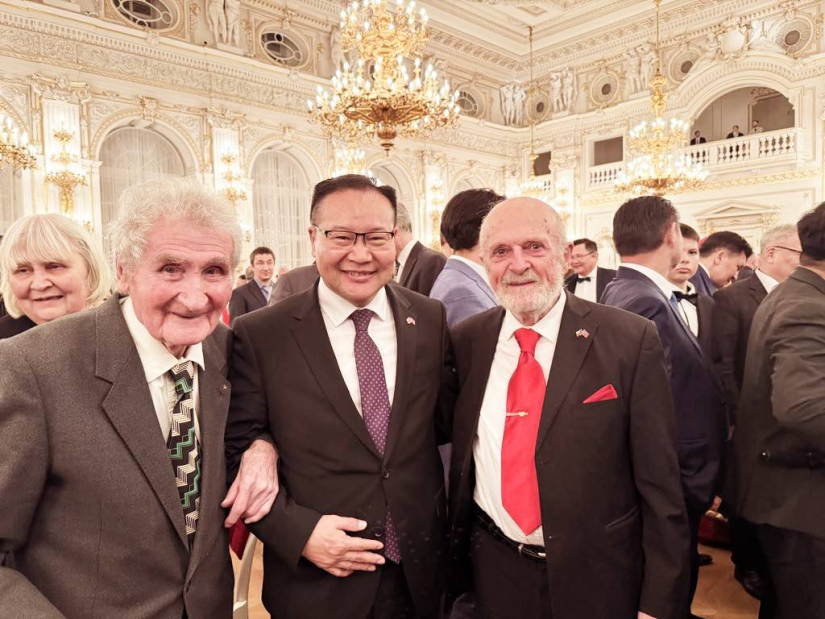
Ambassador Gansukh with Czech geologist Mojmír Krauter, who studied and determined the reserves of the Erdenet mine, and the renowned Mongolist, translator, and Ambassador Jiří Šíma
You mentioned that thousands of our citizens live and work in the Czech Republic. You also spoke about students. Could you tell us about the living conditions and welfare of these citizens?
A vital pillar of bilateral cooperation is the relationship between our people. They serve as a strong cultural bridge of mutual understanding and trust between the two nations. Over the past decades, more than 20,000 Mongolians have worked, studied, and gained professional skills in the former Czechoslovakia and, over the last 30 years, in the Czech and Slovak Republics.
The fact that the Czech Republic hosts the largest Mongolian community in Europe is, I believe, a testament to the close and friendly relations between our two countries.
You are concluding your four-year term as Ambassador to the Czech Republic. What would you highlight as the major achievements of your tenure?
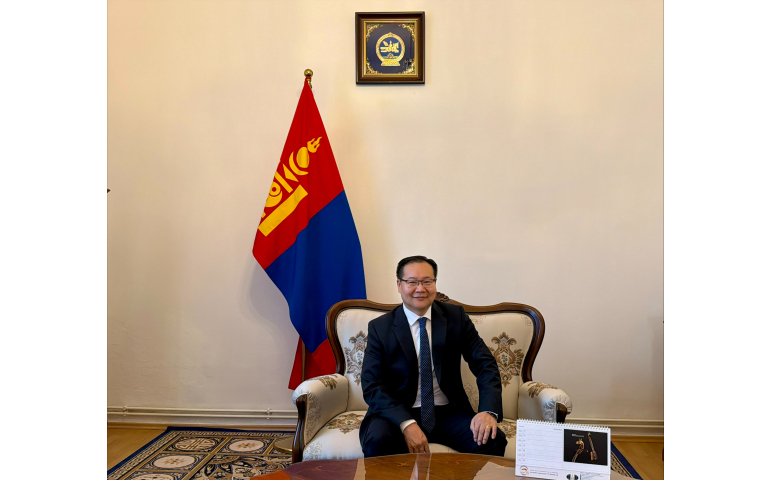
In summary, I am deeply grateful for the opportunity to have organized the state visit of the President of Mongolia during my tenure as Ambassador. During this period, Mongolia and the Czech Republic elevated their relations to the level of a Comprehensive Partnership, making the Czech Republic the second member state of the European Union with which Mongolia has established such a partnership.
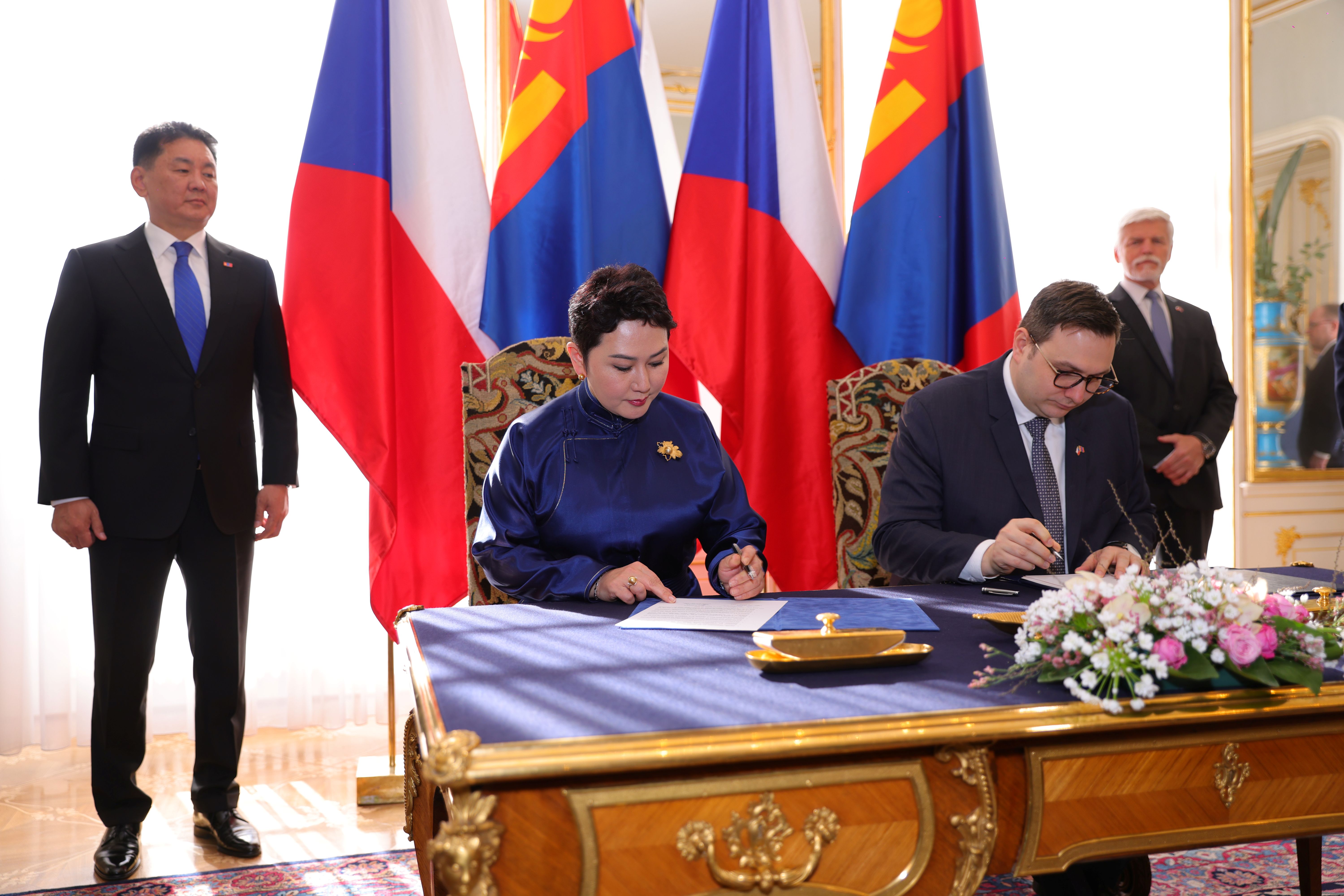
Mongolian citizens working in the Czech Republic have gained the right to receive pensions and to exchange their Mongolian driver’s licenses. Over the past four years, the two sides have concluded nearly twenty bilateral cooperation documents. The number of Mongolian students studying at Czech universities has increased. Initiatives are underway to establish Mongolian language and cultural centers and clubs in three cities where large numbers of Mongolian citizens reside.
We have actively worked to strengthen ties between the private sectors and business communities of the two countries, achieving tangible results. Our Embassy has focused on working closely with citizens and providing state services efficiently, organizing numerous initiatives that have yielded positive outcomes. Furthermore, Mongolian citizens arriving in the Czech Republic under labor contracts now participate in structured orientation programs before departure, enabling them to become better informed about the host country in advance.
How do you envision the future of the relationship between the two countries?
I view the future of bilateral cooperation with great optimism. Cooperation between our two countries has always been built on both tradition and renewal.
Within the framework of the Comprehensive Partnership, the two sides will expand cooperation through the exchange of knowledge, information, and know-how in agriculture and food production. Cooperation will also be intensified in such fields as industry, chemicals, energy, green technology, infrastructure development, civil aviation, climate and environmental protection, water management, waste management, healthcare, tourism, science, innovation, and smart city development.
Many of our young people are currently studying in the Czech Republic in these fields. Approximately 4,000 children reside in the Czech Republic with their parents, and I consistently encourage their parents to ensure that these young people pursue higher education in the Czech Republic.
The Heads of State of both countries have mutually reaffirmed their strong political will and the real potential for expanded cooperation.
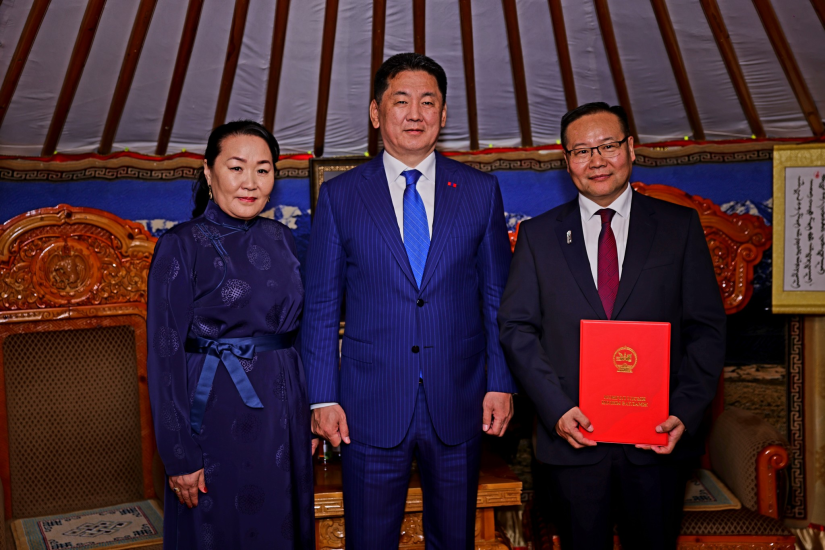
Ambassador Gansukh receiving the certificate and insignia of the diplomatic rank of "Ambassador Extraordinary and Plenipotentiary" from President Khurelsukh Ukhnaa
Finally, as an Ambassador, could you share your first impressions upon your arrival in the Czech Republic, and perhaps your most memorable personal experience?
I have many fond and personal memories connected with the Czech Republic. It was the first foreign country I ever visited. More than forty years ago, when I was still a schoolboy, I spent a summer at an international children’s camp in Czechoslovakia. I was originally scheduled to attend the Artek camp, but the assignment was changed, and I unexpectedly found myself traveling to Czechoslovakia instead.
I remember visiting the Prague Zoo and seeing many animals I had never encountered before, including a giant snake. When I returned home and shared this story, people in my hometown found it hard to believe. Our local “khairkhan” (large snake) was quite small by comparison, so it was difficult for them to imagine such a creature. Over time, the memory faded. When I later returned to the Czech Republic as Ambassador, I immediately went back to the zoo, took a photo of the giant “khairkhan,” and sent it to my friends back home.
The Ikh Ekhlelt cooperative of Khashaat soum in Arkhangai aimag once maintained a patronage relationship with a cooperative in Czechoslovakia. As a result, outstanding workers from our soum were able to visit this beautiful country. In 1960, the Czech side donated a diesel power station to Khashaat soum, making it one of the few soums in the country with electric lighting at the time. Elders also recall that Tatra trucks were used by the cooperative. Rare and valuable photographs of people from my hometown are preserved in the Asian Miniature Museum established by the renowned Mongolist Jiří Šíma. These memories connected with the Czech Republic always remind me of my childhood, my homeland, and the people I hold dear.
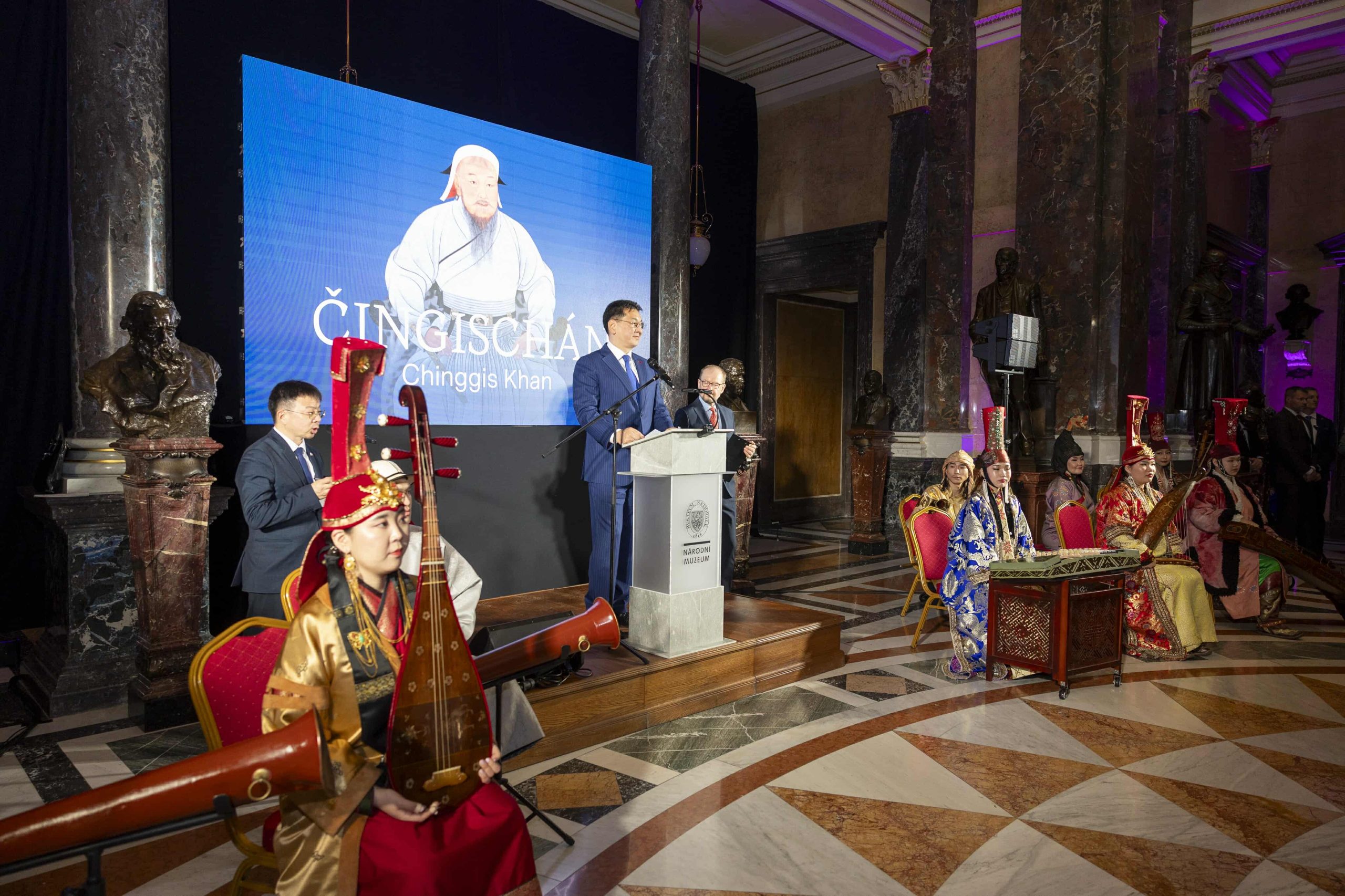
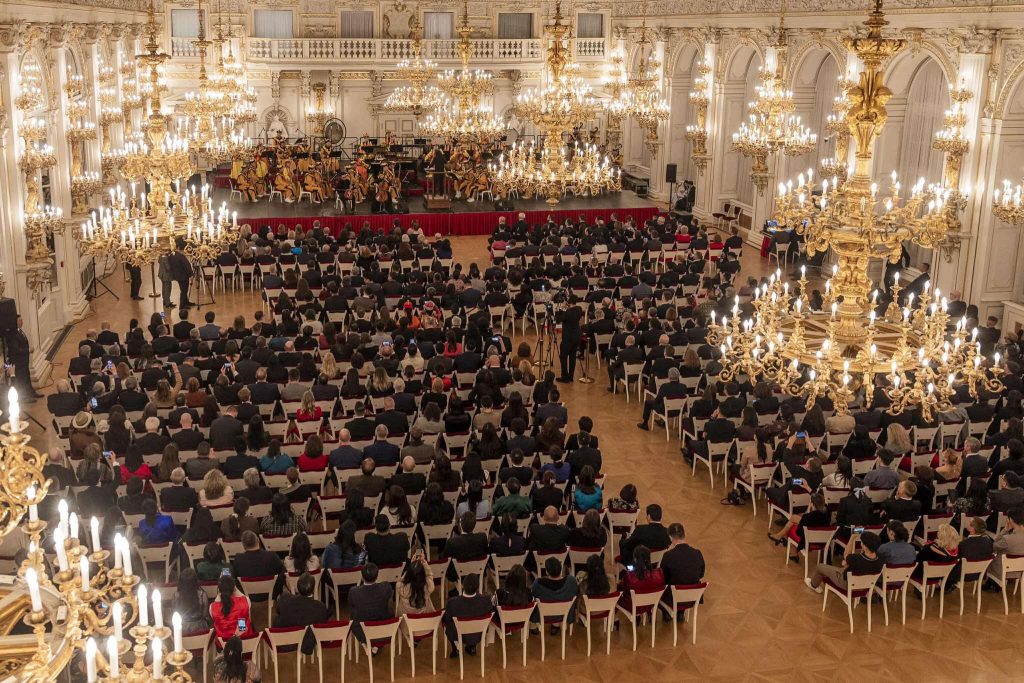
Opening the "Chinggis Khaan" exhibition and a performance by the Morin Khuur Ensemble in Prague during the state visit of the President of Mongolia